Los pedidos se entregan normalmente a España en un plazo de 48 horas, según la ubicación.
El envío gratuito a España se aplica a pedidos de 50 EUR o más. Los gastos de envío serán de 18 EUR para todos los pedidos inferiores a 50 EUR.
Flete prepago de UPS o FedEx: DDP (aranceles y aduanas pagados por DigiKey)
Flete prepago de DHL: CPT (aranceles, aduanas e IVA adeudados en el momento de la entrega)
Cuenta de crédito para instituciones y empresas calificadas
Pago por adelantado a través de transferencia bancaria
![]()
![]()
![]()
![]()


Más productos de socios totalmente autorizados
Tiempo promedio de envío de 1 a 3 días , se pueden aplicar cargos adicionales por envío. Consulte la página de productos, el carrito y el pago para estimar la velocidad del envío actual.
Incoterms: CPT (impuestos, tarifas aduaneras e IVA/impuestos aplicables pagaderos en el momento de la entrega)

Para obtener más información, visite Ayuda y soporte
In this tutorial, we'll create a very simple button-controlled blinking LED program using Embassy's async functions and task spawning, demonstrating how async/await syntax allows you to write concurrent code that appears sequential while the executor efficiently switches between tasks.
In this tutorial, we’ll explore how to use the Raspberry Pi Debug Probe to perform step-through debugging in Rust.
In this tutorial, we'll explore how to configure and handle timer interrupts on the Raspberry Pi Pico 2, creating a blinking LED program where the processor spends most of its time sleeping while hardware interrupts handle all the timing.
In this tutorial, we'll explore how to apply TDD principles to embedded Rust by writing unit tests for our TMP102 driver library.
In this tutorial, we'll learn how to create a reusable library (crate) in Rust by extracting our TMP102 sensor code into a separate package that can be shared across multiple projects.
In this tutorial, we'll explore how to communicate with external digital devices using Inter-Integrated Circuit (I2C), one of the most popular communication protocols in embedded systems.
In this tutorial, we'll expand our blinking LED project to add USB serial communication, enabling us to send debug messages from our Raspberry Pi Pico 2 to a computer.
This guide walks you through the process of blinking an LED with embedded Rust on a Raspberry Pi Pico 2 (RP2350).
In this tutorial, we look at the history of Rust, its advantages and disadvantages, and show how to create a basic "Hello, World!" application.
Use a Pico W or Pico 2W to bridge a wireless keyboard to a USB host.
Clear overview of HSTX architecture—async FIFO, command expander, output shifters—and where it fits in maker projects.
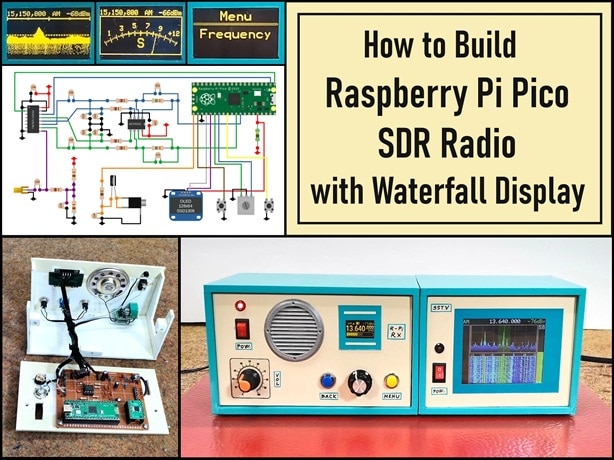
This project demonstrates the incredible potential of software-defined radio, transforming a few simple components into a powerful and flexible communication tool.
¡Gracias!
¡Esté atento a las noticias y actualizaciones de DigiKey que llegarán a su bandeja de entrada!
Ingrese una dirección de correo electrónico
Acepte marcando la casilla